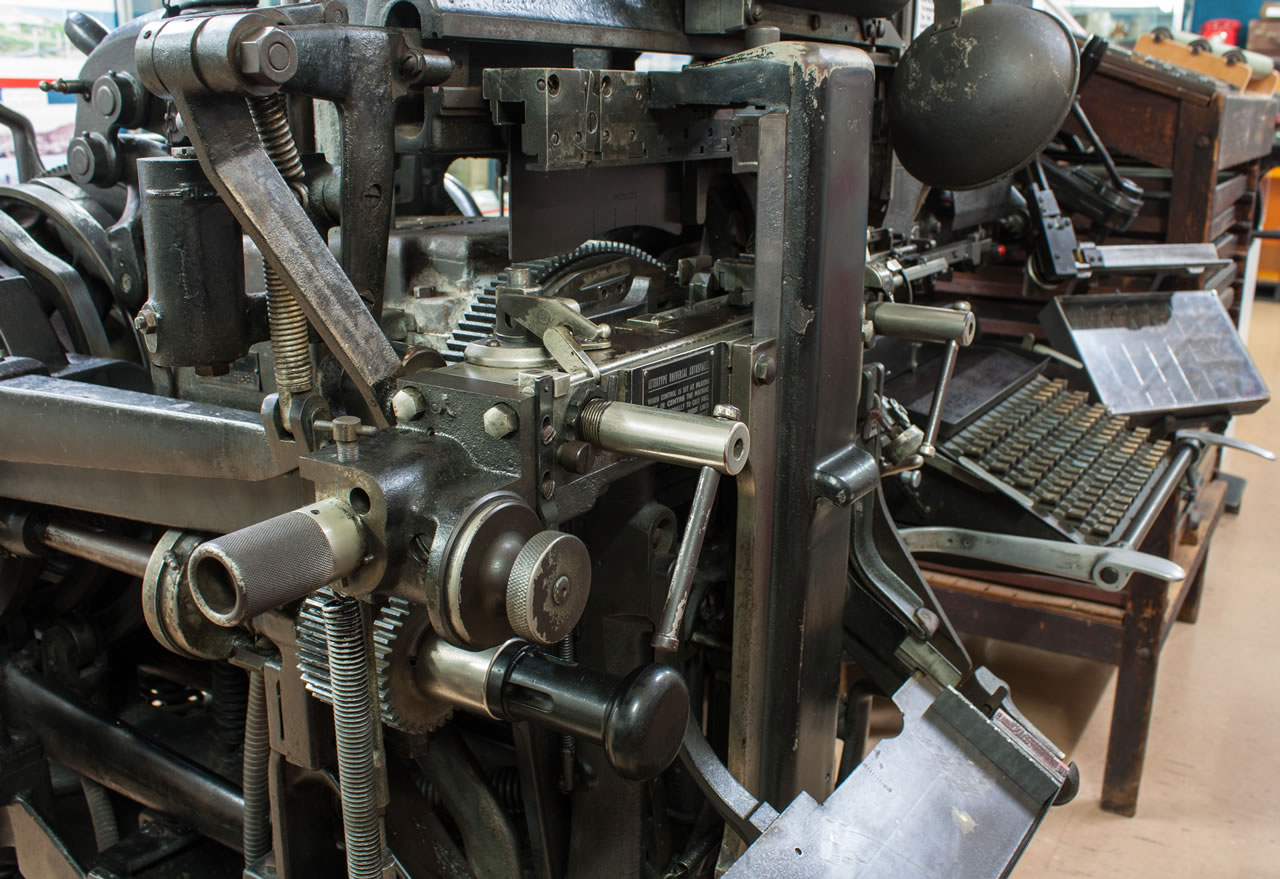
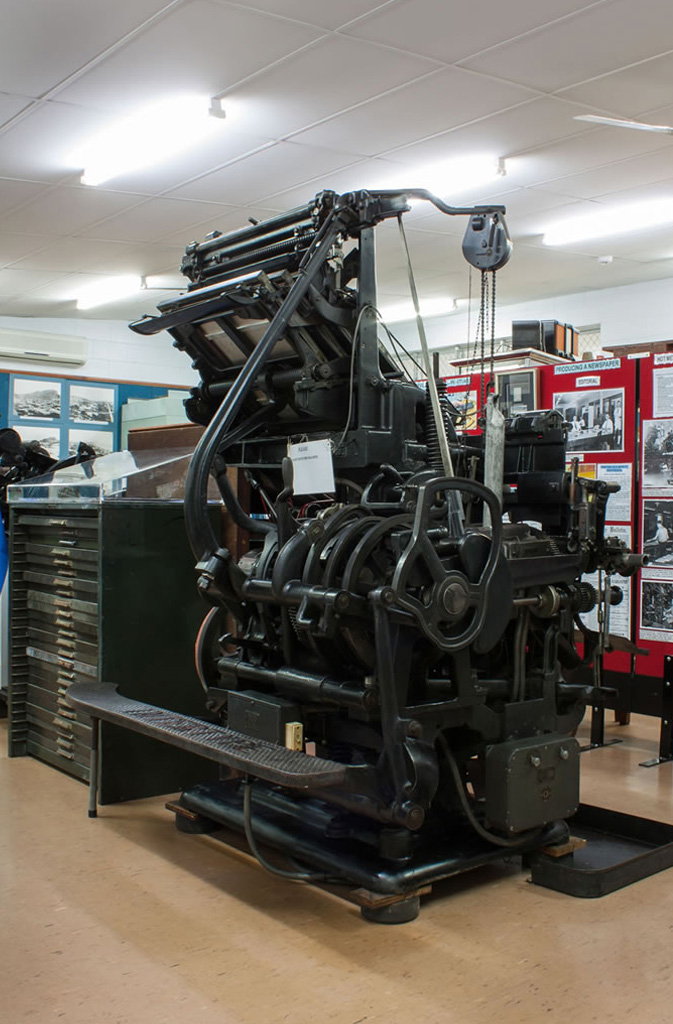
This impressive printing press offers a glimpse into the noisy, mechanical world of newspaper production and the skill required to bring the Townsville Bulletin to life.
The Printing Exhibit showcases the machinery and processes once used in traditional newspaper printing, helping visitors appreciate how far communication, publishing and printing technology have changed over time.
Before digital publishing, online news and computerised printing systems, newspapers were produced through a hands-on mechanical process involving large presses, metal type, ink, paper, timing and technical skill. The Townsville Bulletin was once created through this kind of demanding production work, where every edition relied on machinery, tradespeople and careful coordination.
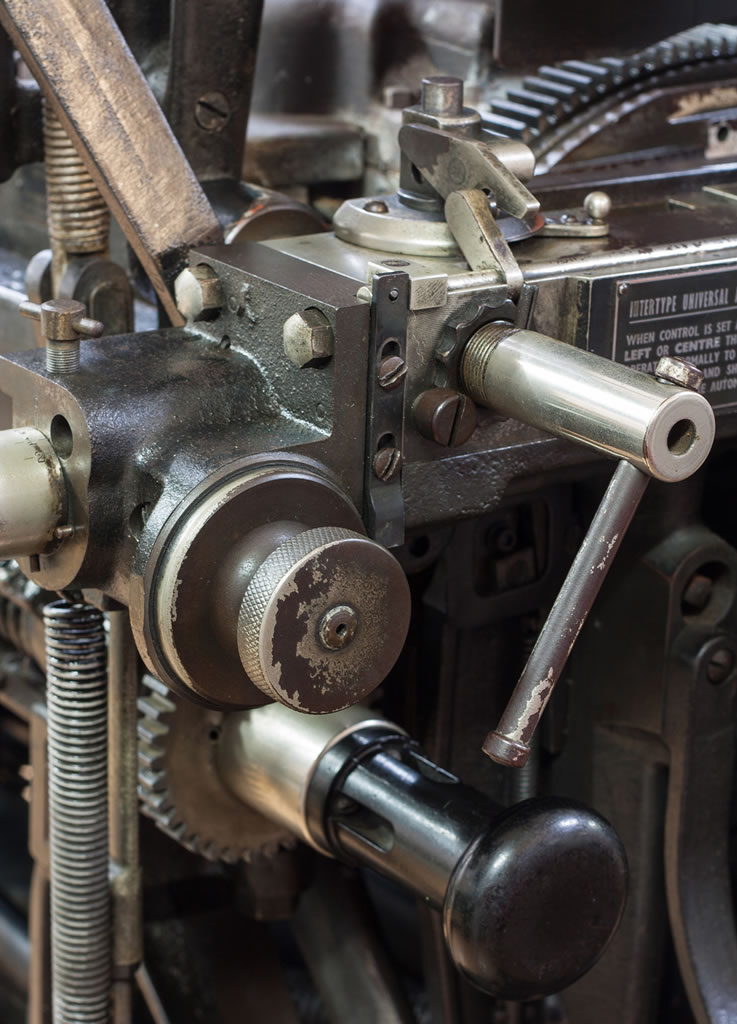
At the centre of this exhibit is a large printing press, a striking reminder of the scale and complexity behind newspaper production. Its rollers, levers, wheels and heavy metal frame show the engineering that made mass printing possible. Producing a newspaper was not simply a matter of writing stories — it involved typesetting, layout, printing, checking and distribution, often under tight daily deadlines.
This exhibit invites visitors to revisit a printing process that has now largely disappeared from everyday view. It highlights how dramatically the newspaper industry has changed, from physical presses and printed editions to digital newsrooms, websites and instant online updates.
What You'll See
Large mechanical printing press once connected with newspaper production
Equipment representing the traditional printing process of the Townsville Bulletin
Rollers, gears, levers and press mechanisms used in print production
Examples of how newspapers were produced before modern digital systems
A look at the trade skills behind printing, typesetting and publishing
Displays showing how technology changed the newspaper industry
A connection to Townsville’s media, business and communication history